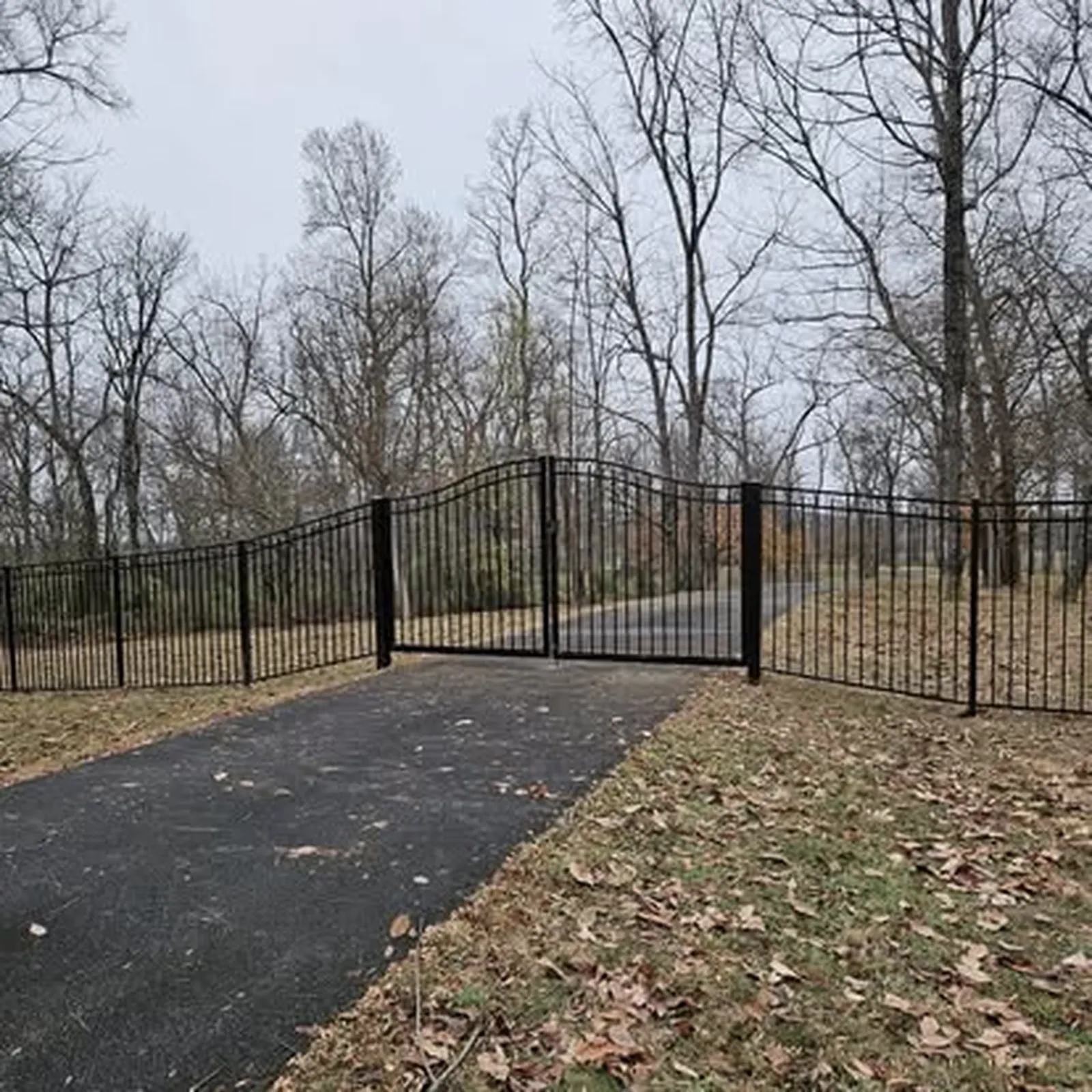
Author: Zackary Michael

Staining vs Painting a Wood Fence: Which Finish Wins

A new wood fence has about one season of grace before Virginia weather starts working on it. UV grays the boards, rain swells them, and the homeowner faces the finish question every wood fence eventually asks: stain it or paint it?

Both protect the wood. Both look sharp the day they dry. But they age in completely different ways, and the one you pick determines what maintenance looks like for the life of the fence. Here is the comparison we give Winchester homeowners, along with the timing that makes the job easier.

Should you stain or paint a wood fence?

Stain, in almost every case. Stain soaks into the wood instead of coating it, so it fades gradually and recoats with simple cleaning and a fresh application. Paint forms a film that cracks and peels under sun and moisture, turning every repaint into a scraping and priming project. Fences flex and weather too much for film finishes to hold.

That is the short answer we would give a friend. The longer answer involves what look you want, what the fence is made of, and one or two situations where paint still earns its place, so keep reading before you buy five gallons of anything.
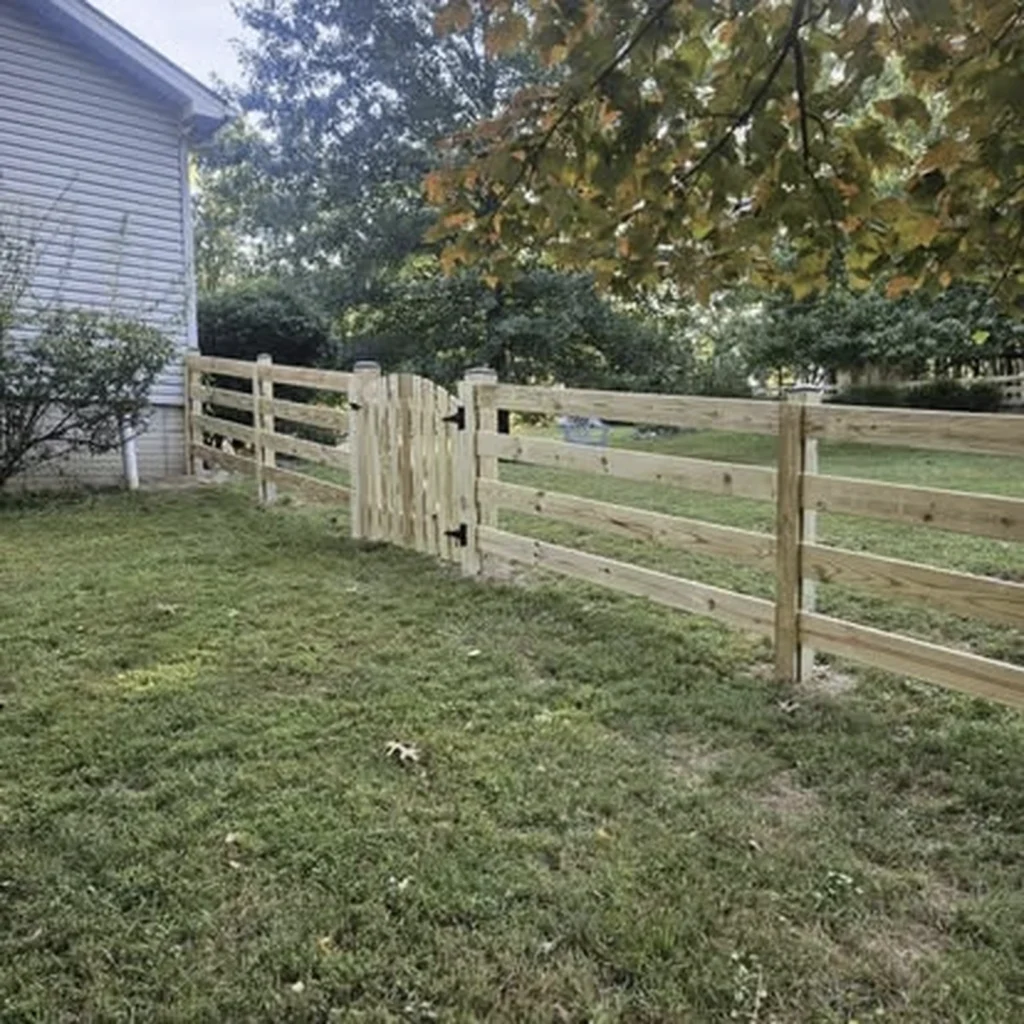
Should you stain or paint a wood fence?, Winchester Fence

Why stain wins on wood fences

Wood fences move. Boards expand in August humidity, shrink in January cold, and flex every time the wind loads a privacy panel. Penetrating stain rides that movement because it lives in the wood fibers rather than on top of them. There is no film to crack, so failure looks like gentle fading instead of peeling, and fixing it means cleaning the fence and applying another coat right over the old one.

Stain also scales with the look you want. Transparent and semi transparent stains show grain and deepen the wood’s natural color, solid stains behave almost like paint while still breathing, and everything between lets you tune the balance of color and texture. On pressure treated pine, the standard fence wood around Winchester, a quality semi transparent stain every two to three years keeps boards protected and rich colored for decades.

Where paint still makes sense

Paint earns its keep in a few specific spots. A classic white picket fence in a historic yard is a painted look, full stop, and no stain reproduces it. Matching fence color exactly to painted trim or shutters is a paint job. And on older fences already carrying layers of paint, staying with paint is usually more practical than stripping back to bare wood.

Go in with clear eyes about the contract you are signing. Exterior paint on a fence typically wants scraping, priming, and repainting on a cycle, and horizontal surfaces like top rails and post caps fail first as water sits on them. If you love the painted look enough to maintain it, it can be beautiful, especially on front yard picket runs that get admired daily. Just choose it as a look, not as protection, because stain protects better for less work.
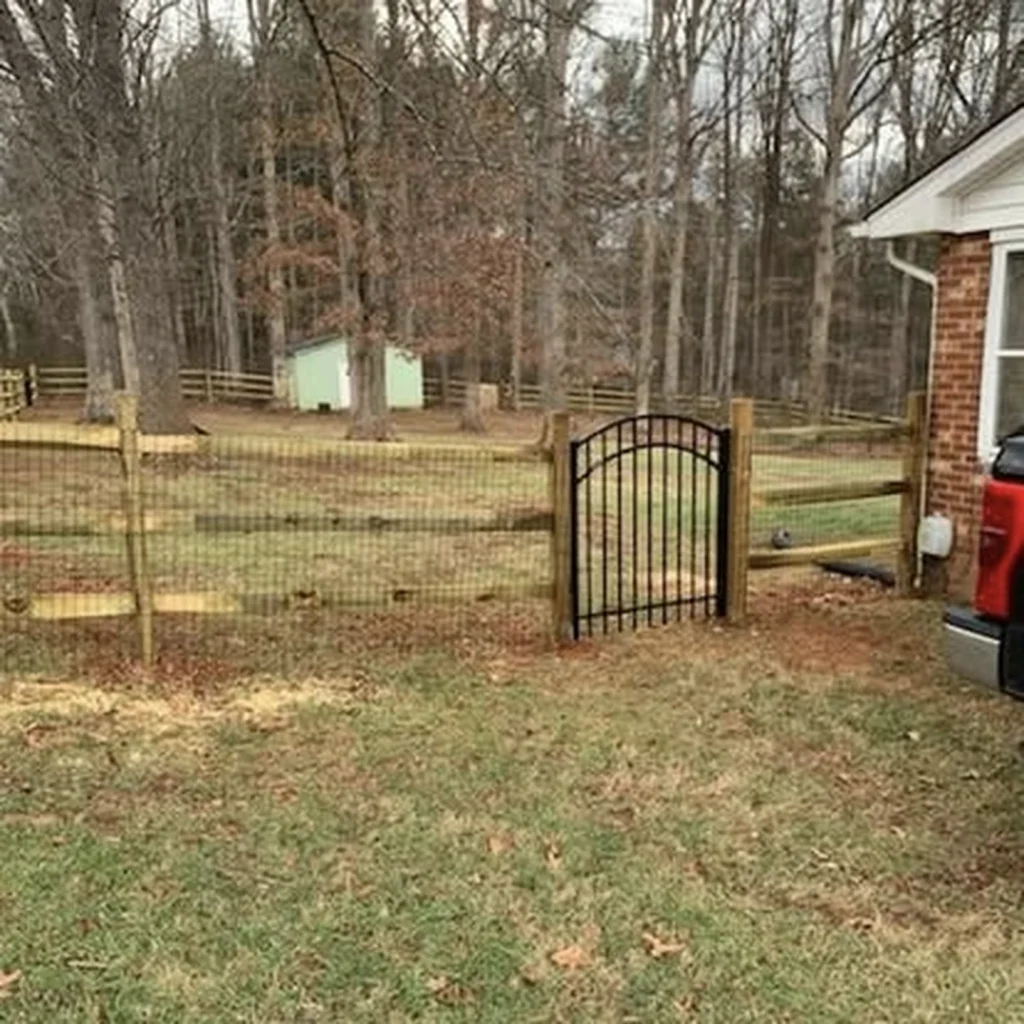
Where paint still makes sense, Winchester Fence

Fall is prime finishing season in Winchester

Stain has weather requirements, and autumn around Winchester meets them more reliably than any other season: moderate temperatures, lower humidity than summer, and stretches of dry days. Most stains want dry wood, moderate temperatures for application, and a rain free day or two after, which describes a typical September or early October week here almost perfectly.

Finishing in fall also means the fence heads into its hardest season protected. Winter is when snow sits against bottom boards, freeze and thaw cycles pump moisture through unsealed grain, and unprotected wood does most of its cracking and cupping. A fence sealed in October simply arrives at spring in better shape than one waiting for a May weekend that keeps raining out.

New fence timing and prep that makes finish last

The counterintuitive rule for new fences: wait. Pressure treated lumber arrives saturated, and stain cannot penetrate wood that is still full of moisture. Most new fences around here want several weeks to a few months of drying before their first finish, and the simple test is a splash of water: if it soaks in rather than beading, the wood is ready. Cedar dries faster and can usually be finished sooner.

Prep decides how good the finish looks and how long it lasts. Clean the fence first, a gentle wash to lift dirt, mildew, and gray surface fibers, and let it dry fully. Then apply on a mild, cloudy day, working stain into end grain and board bottoms where water enters first. A sprayer speeds the job, but backing it up with a brush drives the finish into the grain instead of leaving it lying on the surface.

Bottom Line

Stain for protection that ages gracefully, paint only when a specific look demands it, and put the job on the fall calendar while the weather cooperates. Prep well, wait for new wood to dry, and the finish will return the favor for years. Winchester Fence builds wood fences across the Winchester area and will tell you exactly when yours is ready for its first coat, and what we would put on it if it were ours.

Related reading: Property Line Etiquette: What to Do Before You Build a Fence, Aluminum vs Wrought Iron: Getting the Classic Metal Fence Look
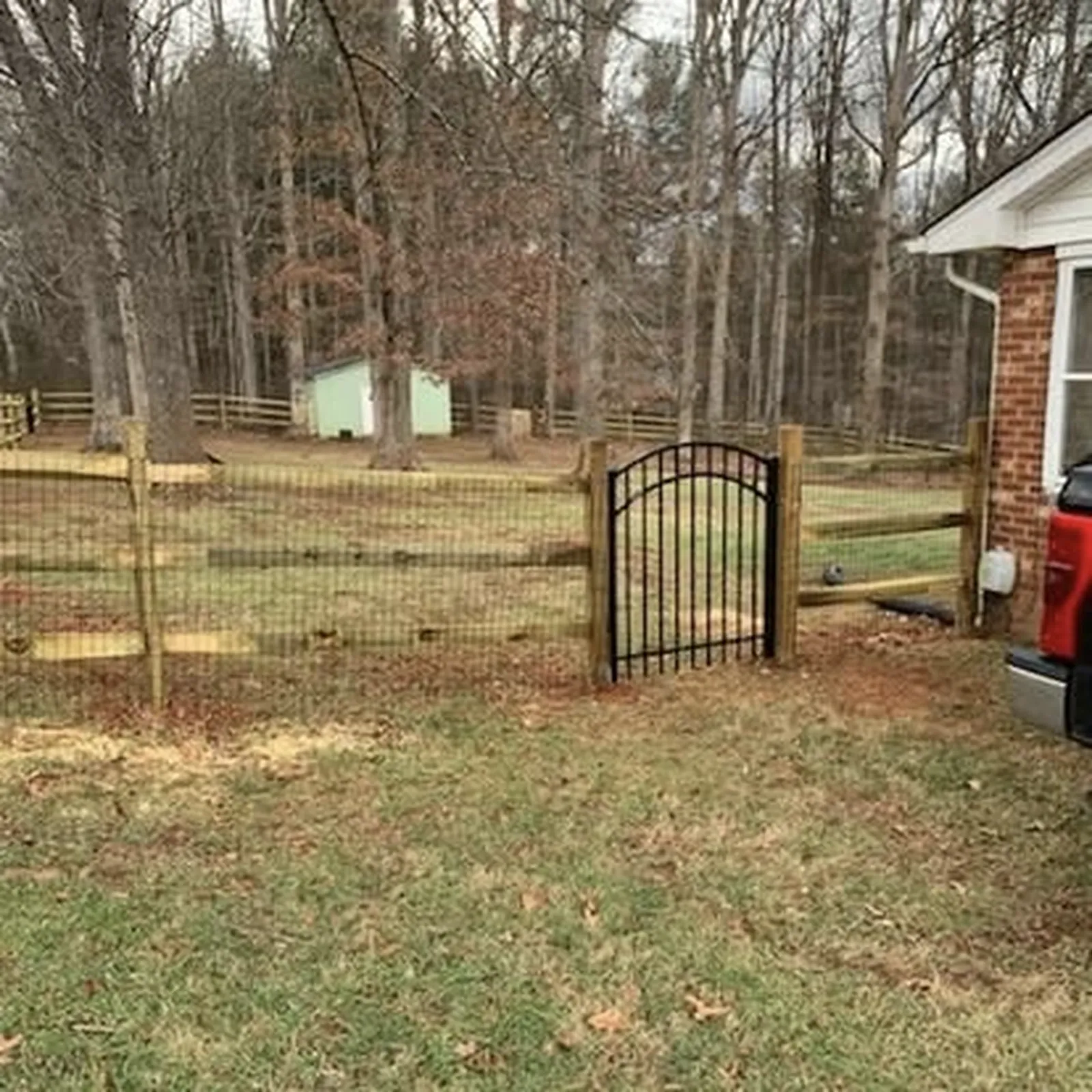
Aluminum vs Wrought Iron: Getting the Classic Metal Fence Look
Aluminum vs Wrought Iron: Getting the Classic Metal Fence Look
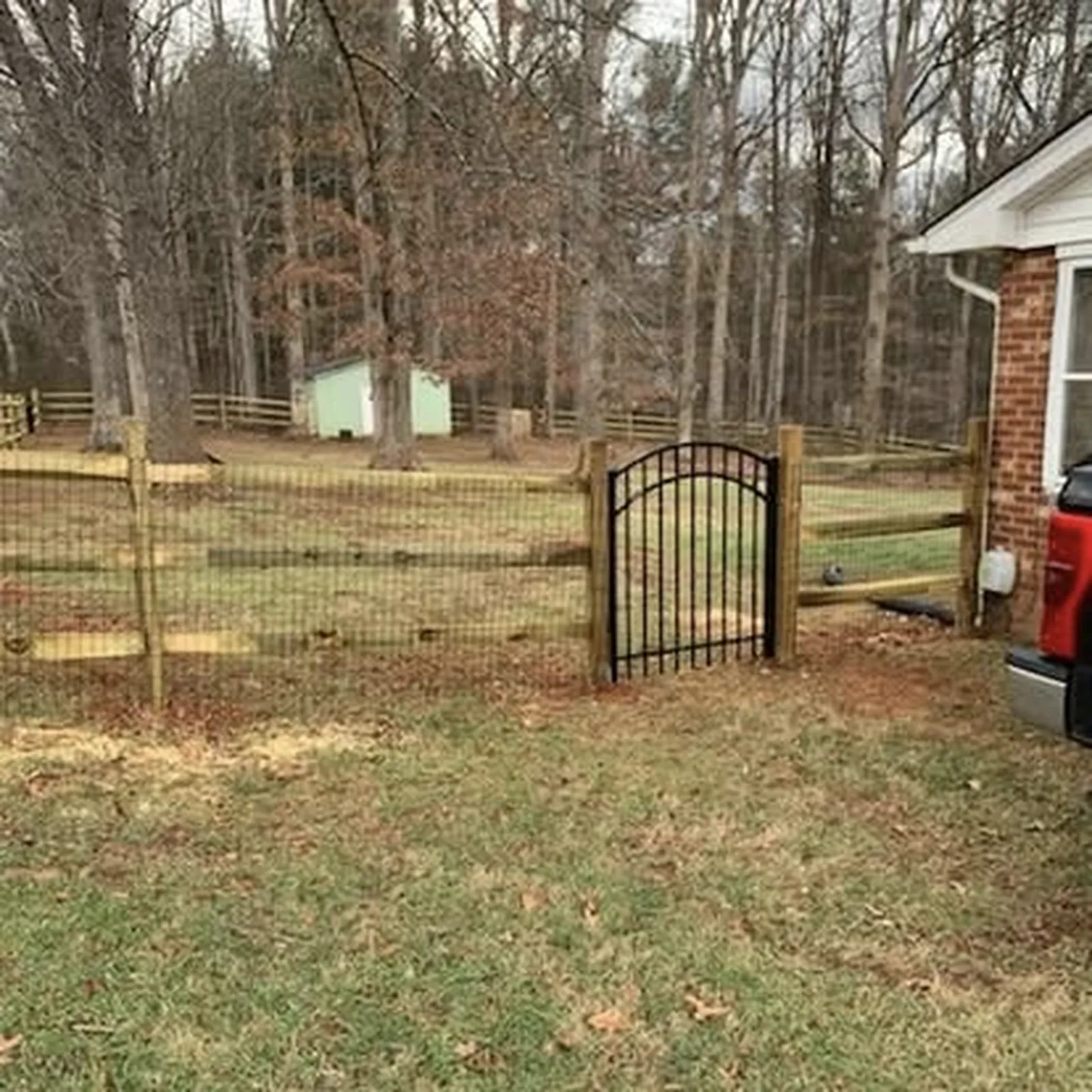
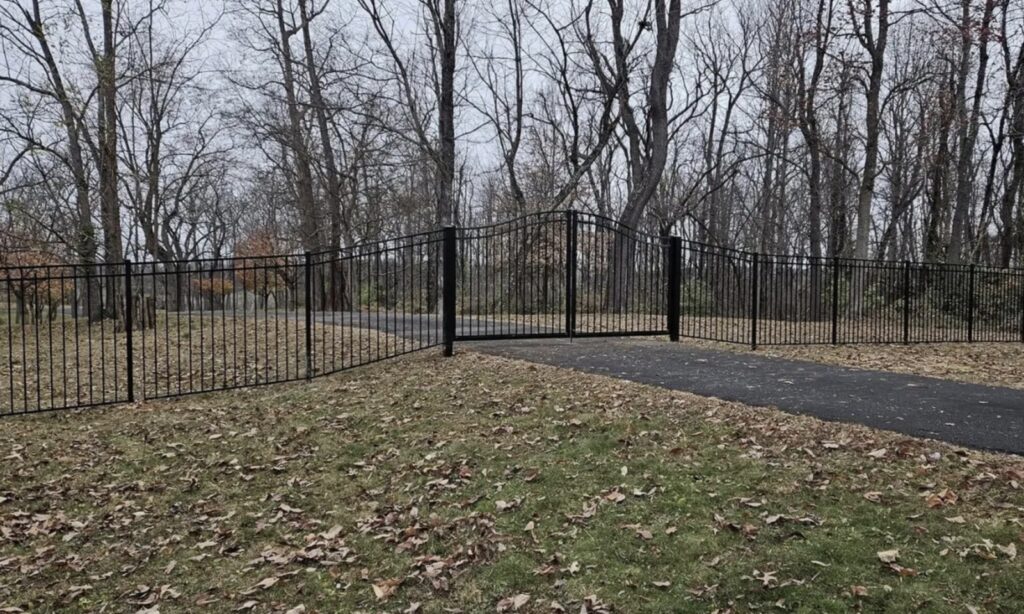
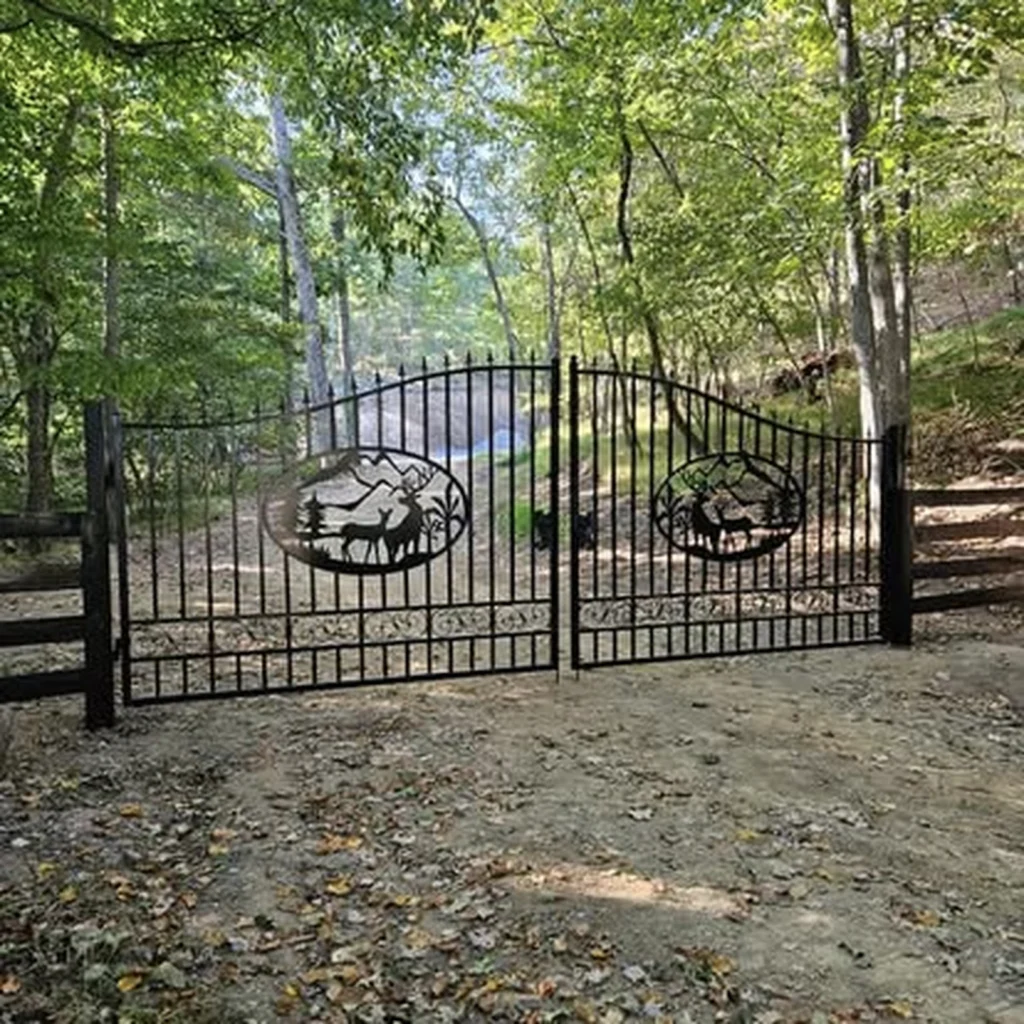
Walk through Old Town Winchester and the metal fences do a lot of the charm: slender black pickets, finials, scrollwork guarding brick walkways that have been there two centuries. When homeowners call asking for a wrought iron fence, that picture is usually what they mean.

Here is the industry’s quiet secret: most of the new iron fences you admire are not iron at all. They are aluminum, engineered to wear the same look without the rust. Whether that substitution is right for your home is the real question, and it has an honest answer.

Is aluminum or wrought iron fencing better?

Aluminum delivers the classic metal picket look at a fraction of the cost, never rusts, and needs essentially no maintenance, which is why the vast majority of new metal fences around Winchester are aluminum. True wrought iron wins on strength, heft, and historical authenticity, but demands rust upkeep, a larger budget, and often custom fabrication.

For most homes, aluminum is simply the smarter buy. The cases where iron earns its premium are real but specific: historic properties where authenticity matters, high security applications, and custom artistic work no extrusion catalog can match. Everything below is the detail behind that verdict.

Is aluminum or wrought iron fencing better?, Winchester Fence

Cost: a wide gap on day one and beyond

Ornamental aluminum typically installs in the same range as nice vinyl, which surprises people expecting metal to break the budget. Wrought iron plays in a different league entirely, often two to three times the price of comparable aluminum, because you are buying heavy material, skilled fabrication, and slower installation. Add custom scrollwork and the gap widens further.

The maintenance ledger tilts the same direction. Aluminum’s powder coated finish asks for a rinse and an occasional inspection. Iron asks for vigilance: touching up chips, sanding rust blooms, and repainting on a cycle, either your weekends or a painter’s invoice. Over twenty years, an iron fence quietly costs a second fence in upkeep. Priced over its lifetime, aluminum is not just cheaper, it is dramatically cheaper.

Rust and upkeep in Valley weather

Iron and water have a relationship, and Winchester weather officiates it. Humid summers, snow piled against pickets, and freeze and thaw cycles all find every chip in an iron fence’s paint, and rust never announces itself politely. A well maintained iron fence can outlive its owner, but well maintained is the load bearing phrase. Neglected iron pits, flakes, and eventually fails at the welds.

Aluminum opts out of that entire story. It does not rust, period, and modern powder coating resists chalking and fading for decades, which is why manufacturers back it with lifetime warranties. The honest weaknesses are different: aluminum dents where iron shrugs, and a mower strike or a falling limb can bend a picket. The consolation is that repairs mean swapping a panel, not firing up a welder.

Rust and upkeep in Valley weather, Winchester Fence

Looks: can you actually tell the difference?

From the sidewalk, rarely. Modern aluminum comes in the same matte and gloss blacks, the same picket profiles, spear tops, rings, and finials, and the better lines add thicker rails that read convincingly as iron. Winchester HOAs approve them interchangeably, and resale photos flatter both identically. For the standard ornamental look, aluminum passes the eye test at any normal distance.

Up close, iron still owns a few tells. The heft is visible: pickets feel dense, welds look sculptural, and true hand worked scrollwork has irregularities no extrusion reproduces. On a landmark property or a historic district restoration, those tells matter and may even be required by review boards. On a family yard in a newer neighborhood, they are a premium almost nobody will ever notice.

Strength, security, and repairs

Iron is genuinely stronger. It resists impacts, bending, and determined climbing better than aluminum ever will, which is why commercial security fencing and institutional work still specify steel and iron. If the fence’s job includes stopping vehicles, livestock, or intruders with tools, weight wins the argument.

Residential jobs rarely ask for that. Keeping kids and dogs in, marking the yard elegantly, and meeting pool code are well within aluminum’s abilities, and aluminum’s pool friendly styles with self closing gate hardware make it the default choice around water. Repairs favor aluminum decisively: panels unbolt and replace in an afternoon with a perfect factory color match, while iron repairs mean welding and blending paint. Either material, on proper footings, will hold its line through decades of Valley winters.

Bottom Line

Buy aluminum for the look, the price, and the freedom from rust. Buy wrought iron when authenticity, artistry, or serious security genuinely justify the premium and the upkeep. Both wear the classic black picket beautifully. Winchester Fence installs ornamental aluminum across Winchester and can price the comparison for your yard in one visit, so you can see exactly what the iron look costs with and without the iron.

Related reading: our aluminum fence services, Building a Fence on a Slope: How Winchester Yards Get It Right, Property Line Etiquette: What to Do Before You Build a Fence

Property Line Etiquette: What to Do Before You Build a Fence

Property Line Etiquette: What to Do Before You Build a Fence

Fences do not start neighbor disputes. Assumptions do. Nearly every fence line argument we have ever seen around Winchester began with somebody being sure they knew where the line was, and being sure turned out to be about eighteen inches off.

The fix costs a fraction of the fence and takes a week: confirm the line, have one friendly conversation, and make a couple of small decisions deliberately. Here is the etiquette, written down, so your new fence improves two properties instead of straining one relationship.

Do you need a survey before building a fence?

If you are not completely certain where your property line sits, yes. A residential survey around Winchester typically costs a few hundred dollars, while moving a fence built on the neighbor’s land costs the fence. Plat maps and GIS parcel viewers help you estimate, but only a licensed surveyor’s stakes settle the question.

Sometimes the evidence already exists: original survey pins at the corners, a recent survey from your closing paperwork, or a neighbor’s survey that marked the shared line. Finding two pins with a metal detector and matching them to your plat can be enough for a confident build. When pins are missing, bent, or contradict the fence next door, stop guessing and book the surveyor.

Do you need a survey before building a fence?, Winchester Fence

Talk to your neighbor before the posts arrive

Nothing in Winchester or Frederick County requires you to notify a neighbor before fencing your own land. Do it anyway. A five minute front porch conversation, here is what we are planning, here is the height and style, the crew will be here Tuesday, converts a potential objector into a spectator, and occasionally into a partner who has been wanting a fence too.

That conversation also surfaces problems while they are still cheap. The neighbor may know where the old pins are, may mention the drainage path that crosses the corner, or may point out that their shed eave overhangs the line. Every one of those is a footnote before the build and a headache after it. Lead with courtesy and the fence starts its life as a good neighbor.

Where exactly should the fence sit

Building tight to the line maximizes your yard, but many owners deliberately set the fence a few inches inside it. That margin removes all doubt about whose fence it is, keeps concrete footings clear of the neighbor’s soil, and leaves you standing on your own property when you stain or repair the outside face later.

Setting in does not mean surrendering land: the strip beyond the fence remains yours, though you should plan to maintain it so it does not become no man’s land. Whatever you choose, mark the decision on the layout with your installer and keep your survey with the fence paperwork. Virginia’s shared fence obligations are largely a livestock and agricultural matter, so on a residential lot, expect the fence you build to be yours alone: your cost, your fence, your maintenance.

Where exactly should the fence sit, Winchester Fence

Good side out and the other unwritten rules

Wood and vinyl fences have a finished face and a structural face, and longstanding custom says the finished side faces the neighbor and the street. Plenty of HOAs write that custom into the covenants. Beyond looks, rails and posts facing outward create a ladder anyone can climb, which is its own reason to keep the smooth side out.

The rest of the etiquette list is short and worth honoring. Keep posts and concrete entirely on your side. Do not attach anything to a fence you did not build, and do not paint your side of the neighbor’s fence without asking. During construction, keep crews, spoil piles, and material staging off the neighbor’s lawn. Small courtesies, long memories.

Old fences lie about old lines

The most dangerous assumption in fencing is that the existing fence marks the boundary. Old fences drift from surveys constantly: a previous owner eyeballed it, followed a tree line, or deliberately set in from the line decades ago. Replacing an old fence exactly where it stood feels safe and sometimes quietly repeats a forty year old mistake.

When we replace a fence near a boundary, we compare the old line against pins or a survey before setting new posts, and the check regularly finds a surprise. It is far easier to correct the line during a replacement, with the neighbor informed and nodding, than to discover the error when one of the properties sells and a closing survey lights it up.

Bottom Line

Confirm the line, say hello before you dig, decide deliberately whether to build on it or inside it, and give the neighborhood your good side. That is the entire etiquette, and it costs almost nothing. Winchester Fence checks pins, reads plats, and walks the line with you on every boundary build around Winchester, because the best fence projects end with two happy households, and that outcome is built before the first post hole.

Related reading: our fence installation services, Fence Gate Options and Automation for Winchester Homes, Building a Fence on a Slope: How Winchester Yards Get It Right

Building a Fence on a Slope: How Winchester Yards Get It Right

Flat yards are rare gifts in the Shenandoah Valley. Most Winchester properties roll at least a little, and plenty drop several feet from one corner to the other. The fence still has to look straight, keep the dog in, and hold its line on every inch of that grade.

Slopes do not make fences harder so much as they force a decision most homeowners have never heard of: rack or step. Get that choice right for your grade and material, and the slope becomes a feature. Get it wrong and you live with gaps and awkward angles for years.

How do you build a fence on a slope?

Two proven methods handle nearly every slope: racking, where the fence tilts to follow the grade in one smooth line, and stepping, where sections drop like stairs between level panels. Racking suits steady, moderate slopes and keeps the bottom tight to the ground. Stepping handles steep or uneven grades but leaves triangular gaps that need a plan.

Which one your yard wants depends on three things: how steep the grade runs, what material you have chosen, and whether anything small, a puppy, a rabbit obsessed beagle, a toddler, will be testing the bottom edge. A good installer measures the actual drop with a level and a string line before recommending either.

How do you build a fence on a slope?, Winchester Fence

Racking: the smooth line that follows the grade

A racked fence adjusts at every picket. The rails angle with the slope while the pickets stay perfectly vertical, so the fence flows downhill in one continuous line with no gaps underneath. On rolling Winchester yards this reads as calm and intentional, and it is the method of choice whenever containment matters, because the bottom edge hugs the ground the whole way.

The limit is geometry. Every material racks only so far before the joinery binds, and sharp grade changes exceed what a single panel can absorb. Custom built wood fences rack the most gracefully, since each board is placed individually on site. Manufactured panels, vinyl especially, rack within a stated range and no further, which is exactly why steep yards often shift strategies partway down the hill.

Stepping: clean lines with gaps to manage

A stepped fence keeps every panel level and drops between them at the posts, like a staircase wearing a fence costume. On steep grades it looks sharp and stately, particularly with vinyl privacy panels and board on board wood styles that resist racking. Posts get taller and holes get deeper on the downhill side, and the crisp horizontal lines suit formal yards beautifully.

The catch lives under each panel: a triangular gap between the level bottom rail and the falling ground. Small dogs treat those gaps as exits, and mowers treat them as trim work. Fixes are straightforward when planned, awkward when improvised, so the gap conversation should happen at the quote, not after the dog demonstrates the problem.

Stepping: clean lines with gaps to manage, Winchester Fence

Which materials handle slope best

Wood built stick style on site is the slope champion, racking smoothly and stepping cleanly, with every cut made to your actual grade. Aluminum comes surprisingly close, since most ornamental panels are engineered to rack a significant amount, which is one reason aluminum shows up on so many sloped front yards around Winchester. Chain link, for all its plainness, follows grade better than almost anything.

Vinyl is the material that demands honesty about your yard. Standard panels rack modestly, steeper grades need special order rackable panels or a stepped design, and pushing a panel past its tolerance voids the clean look you bought vinyl for. None of this makes vinyl wrong on a hill. It makes the measuring tape the first tool on the job, before a single panel is ordered.

Gaps, pets, and finishing the bottom edge

Whatever method wins, the bottom edge deserves a finish plan. Under stepped panels, the classic fix is a kick board, a horizontal board following the grade that closes each triangle, looks tailored, and takes the string trimmer’s abuse instead of your pickets. Filling with soil or stone works on gentle steps, and buried wire mesh handles determined diggers without changing the fence’s look.

Drainage deserves one thought too. Water moves downhill along fence lines on sloped Winchester lots, and a fence should never dam it. Leaving the right clearance, or gapping a kick board slightly, lets storm water pass instead of pooling against posts. It is a small detail that adds years to the bottom of a wood fence.

Bottom Line

Rack the steady grades, step the steep ones, pick a material that matches your slope, and close the gaps like you mean it. A hillside fence built that way looks like it grew there. Winchester Fence measures every sloped yard with a string line before quoting, builds both racked and stepped designs across the Winchester area, and will tell you plainly which method your grade actually wants. Book a walk of the yard and we will bring the level.

Related reading: our fence installation services, Farm and Horse Fencing Around Winchester: Options That Hold, Fence Gate Options and Automation for Winchester Homes

wooden-fence-with-gate-and-vinyl-privacy-in-backyard

Fence Gate Options and Automation for Winchester Homes

Nobody touches their fence every day. Everybody touches their gate. It is the one moving part in the whole project, the part that carries the trash cans through, lets the mower out, and gets slammed by every kid and gust of wind for the next twenty years.

That is why gates deserve more planning than they usually get. A fence quote that treats the gate as an afterthought is quoting you a future annoyance. Here are the options worth knowing, from a simple walk gate to a driveway that opens itself.

What gate options do you have for a new fence?

Three tiers cover almost every home: walk gates for daily foot traffic, double drive gates for mowers, trailers, and the occasional truck, and automated driveway gates with openers, keypads, and remotes. Match the gate material to the fence, then invest in framing and hardware, because the gate works harder than any panel in the run.

The right question is not which gate but how many and where. Most Winchester yards are happiest with two walk gates on opposite sides of the house plus one wide access gate to the backyard, and homeowners who skip that wide gate usually regret it the first time a shed, a hot tub, or a skid steer needs to get back there.

What gate options do you have for a new fence?, Winchester Fence

Walk gates: the small door you use every day

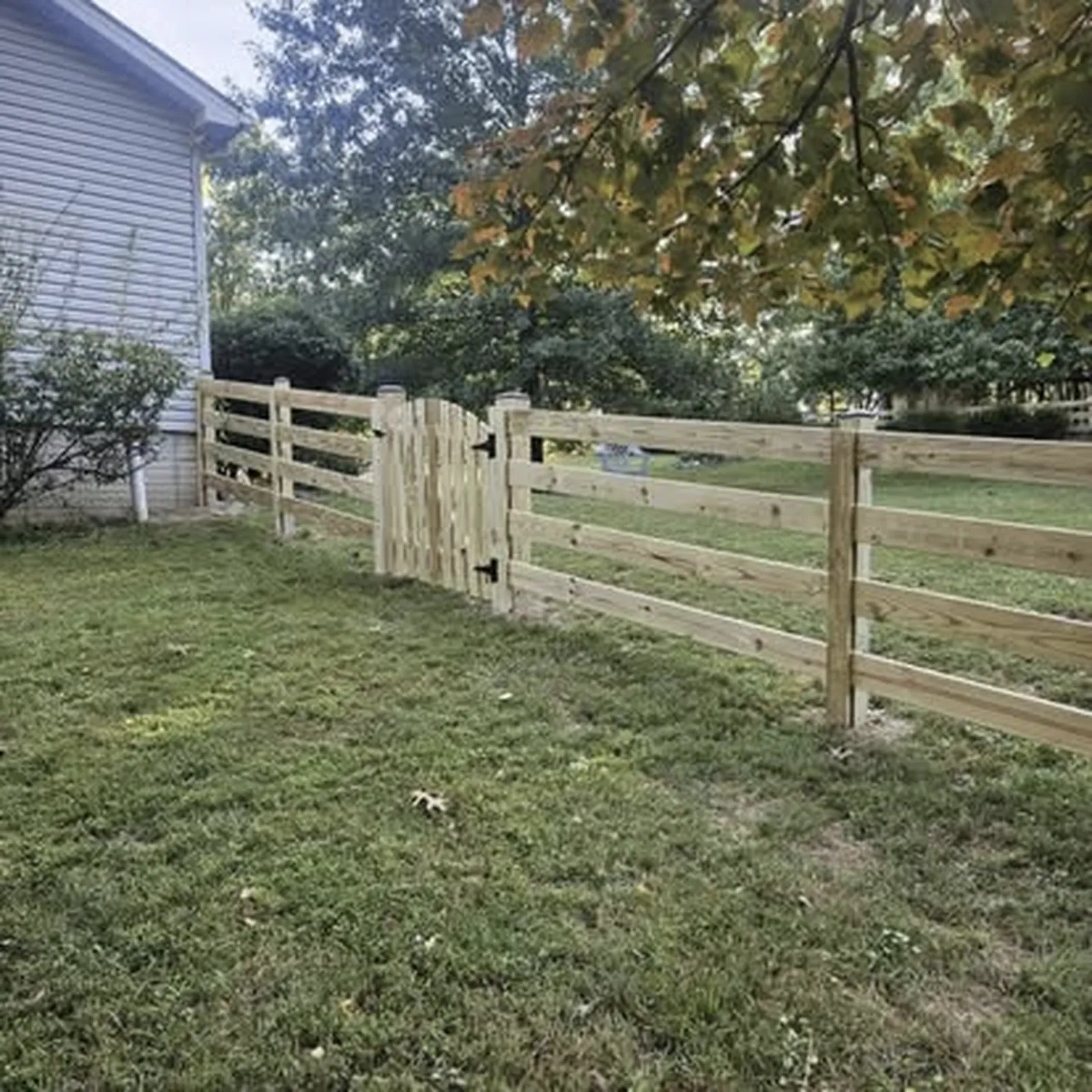
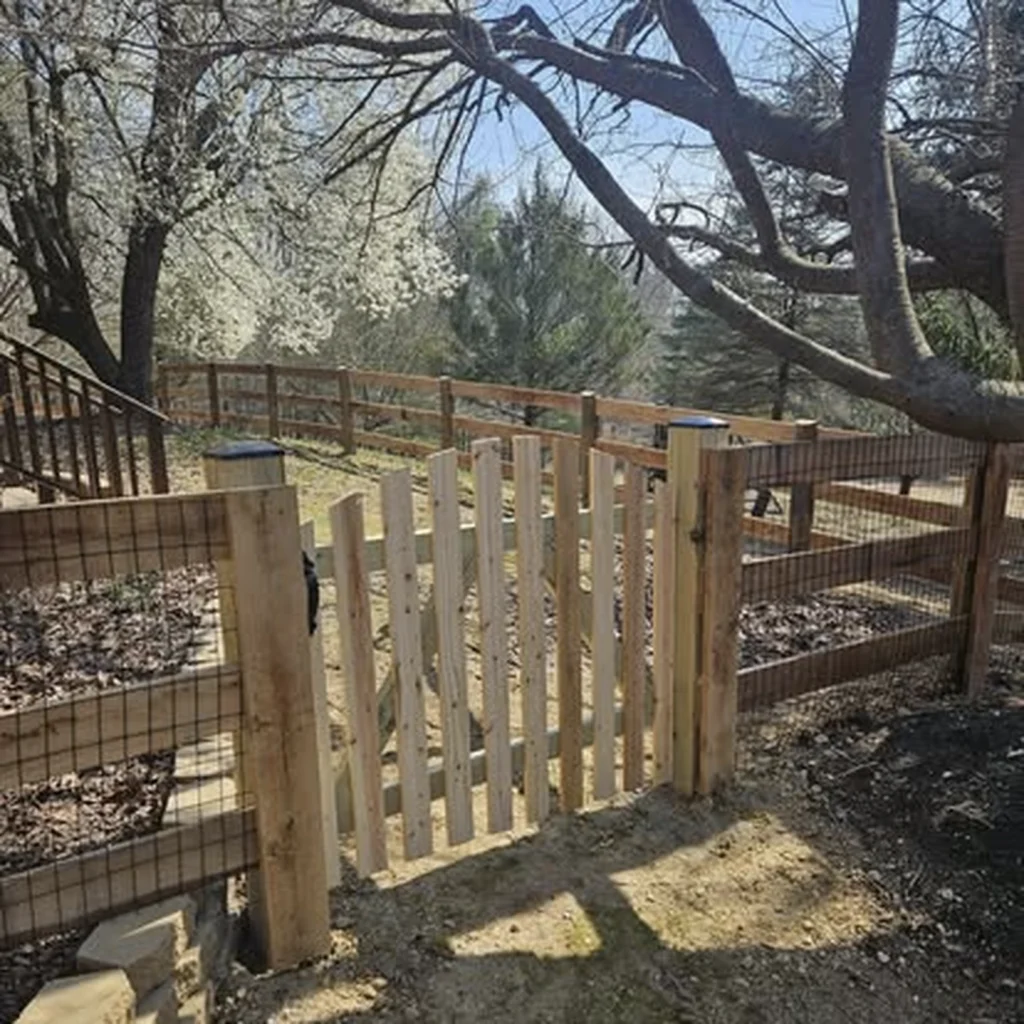
A walk gate looks simple, but a few decisions on installation day decide how it feels for decades. Width is first: 4 feet passes a wheelbarrow and most riding mowers, while a bare 3 foot gate fights you forever. Swing direction is second, into the yard and against a fence line, so wind and gravity work with the latch instead of against it.

Quality shows in the frame. Wood gates want a rigid frame or a steel gate kit to resist sagging, vinyl gates need internal reinforcement, and aluminum gates come welded and basically maintenance free. Latches deserve one deliberate choice too: lockable, gloved hand friendly, and reachable from both sides. For pool areas, self closing hinges and a high latch are code, not a preference.

Drive gates: swing or slide

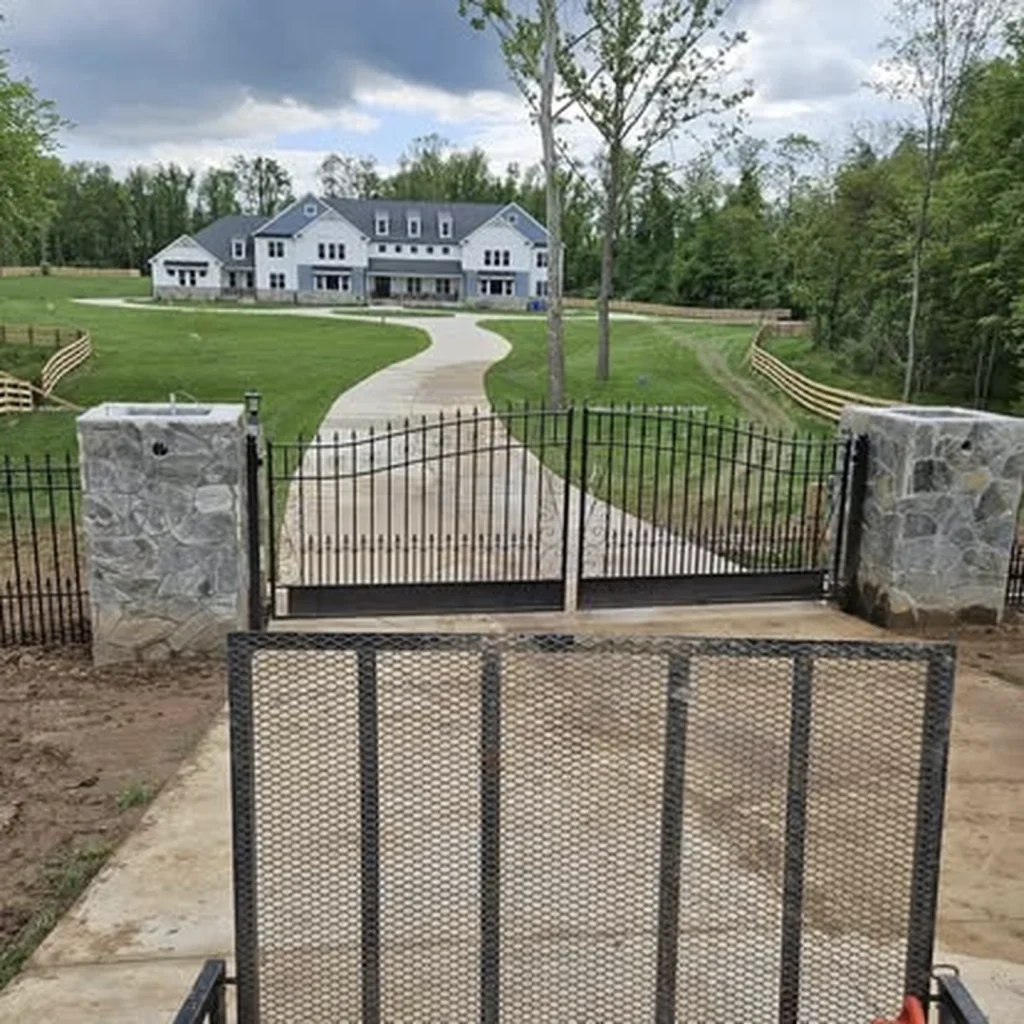
For driveway and backyard access, double swing gates are the default: two leaves totaling 10 to 16 feet, meeting in the middle with a drop rod anchoring one side. They are economical and look right on nearly any fence style. Their one demand is clear, relatively level space to swing through, which most driveways have and some sloped ones do not.

Where slope or parking kills the swing, a slide gate solves it by rolling parallel to the fence line instead. The tradeoff is run space: a 12 foot opening needs roughly that much clear fence line for the gate to slide along. Slide gates also pair beautifully with automation, which is exactly where a lot of Winchester rural driveways and small business yards end up.

Drive gates: swing or slide, Winchester Fence

Automation: openers, keypads, and power

A gate opener turns the driveway gate from a chore into a convenience, and the technology has gotten genuinely good. Swing arm operators handle residential double gates, slide operators handle rolling gates, and both take commands from remotes, keypads, smartphone apps, and vehicle sensors. Out on rural properties around Frederick County, solar powered operators free you from trenching electric to a distant gate entirely.

Two planning notes keep automated projects smooth. First, power and safety: hardwired operators need a proper circuit run, and every modern operator needs its safety features, obstruction sensing and photo eyes, installed and actually working, especially with kids and pets around. Second, structure: an automated gate hangs on serious posts, steel set deep in concrete below frost depth, because the operator multiplies every force the gate ever sees.

Hardware that outlasts the fence

Gates fail at the hardware long before the material gives up, so this is the place to spend. Adjustable hinges let a gate be tuned back to square after seasons of Valley freeze and thaw instead of being shimmed with scrap wood. Stainless and hot dipped galvanized hardware shrugs off rust, while bargain zinc plated pieces streak and seize within a few years.

The other unsung hero is the gate post. It carries all the weight and all the leverage, so it should be a size up from the line posts, set deeper, in more concrete. Nearly every leaning gate we repair around Winchester traces back to a gate post set like an ordinary line post. Build the post right and the gate you buy today still swings true when the kids are grown.

Bottom Line

Two walk gates, one wide access gate, swing or slide for the driveway, and automation wherever convenience earns it. Then spend where the stress lives: frames, hinges, latches, and gate posts. Winchester Fence builds and automates gates across Winchester and the surrounding counties, on new fences and existing ones, and we will happily tune the gate plan to how your family actually moves through the yard.

Related reading: our fence installation services, Pool Fence Code in Virginia: What Winchester Homeowners Need to Know, Farm and Horse Fencing Around Winchester: Options That Hold

Farm and Horse Fencing Around Winchester: Options That Hold

Drive any direction out of Winchester and the fences change. Backyard privacy panels give way to long runs of black board fence, woven wire disappearing over hills, and electric braid humming along pasture lanes. Out here, fencing is not decoration. It is infrastructure with animals leaning on it.

Farm fencing is a different discipline from residential work, with its own math: cost per foot multiplied by thousands of feet, animal behavior, and decades of weather. Here is how the main options compare for horse and small farm properties in our corner of the Valley.

What is the best fencing for horses and small farms?

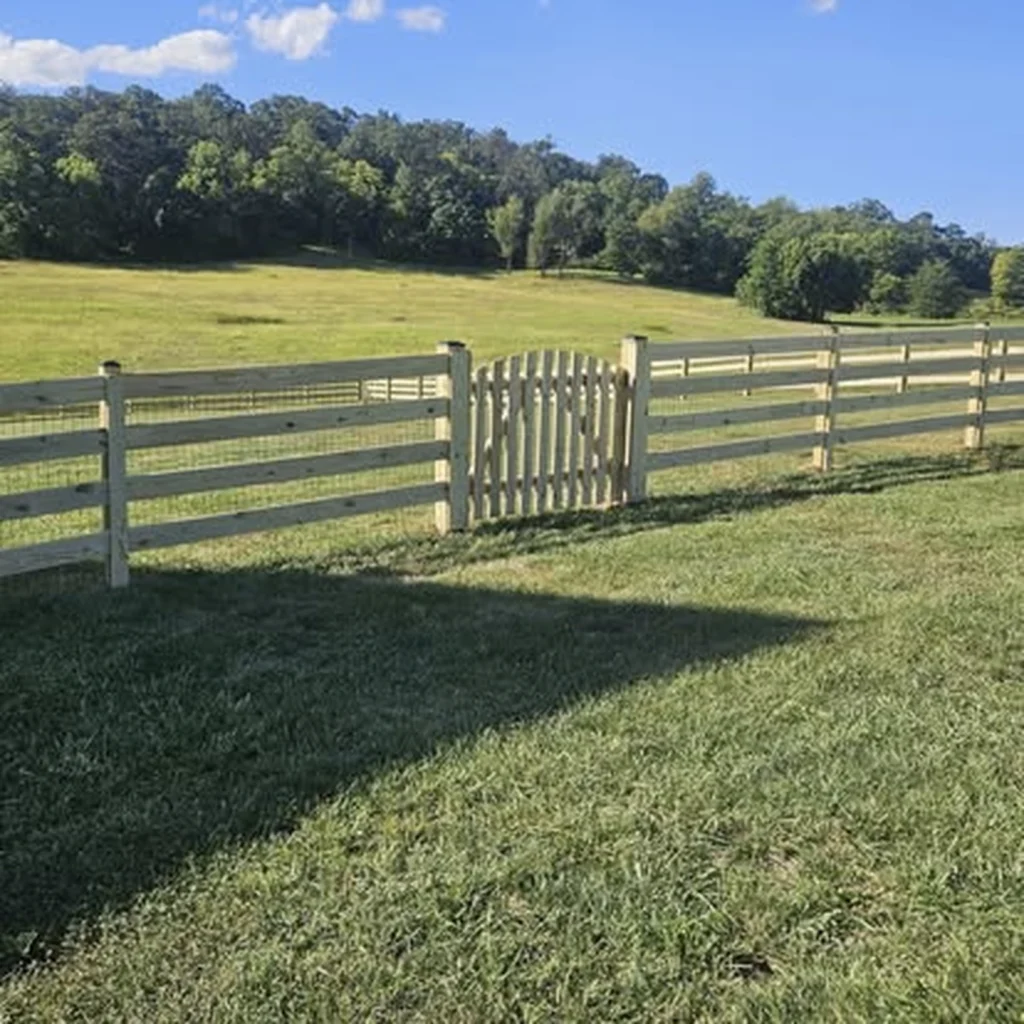
Four board fence is the regional classic for horses: highly visible, strong, and safe when maintained. Woven wire handles mixed livestock and keeps dogs in and predators out, while high tensile and electric braid stretch tight budgets across long runs. Most properties end up mixing two or three types, with the premium fence up front and economical fencing on the back pastures.

That mix and match approach is not a compromise, it is how working farms around Clarke and Frederick County actually fence. The road frontage earns board fence for looks and resale, the perimeter gets woven wire for security, and interior cross fencing runs electric because it is cheap to move when grazing plans change.

What is the best fencing for horses and small farms?, Winchester Fence

Board fence: the Valley classic

Nothing says horse country like a black or white four board fence rolling over a hill. Beyond looks, board fence earns its reputation on visibility and honesty: horses see it clearly at a gallop, and it forms a solid physical barrier that does not tangle a spooked animal. Three board versions work where budgets or slopes demand, but four board is the standard for full sized horses.

The tradeoffs are cost and upkeep. Board fence is the most expensive common farm option per foot, and it wants paint or stain on a cycle plus a walk through every season for loose or cracked boards, because a horse will find the weak one. Oak boards on pressure treated posts, set deep and faced to the animal side, is the build that lasts here.

Woven wire and no climb mesh

Woven wire is the workhorse for mixed animals: goats, sheep, cattle, donkeys, and the farm dogs all respect a properly stretched field fence. For horses, the version that matters is no climb mesh, woven in a tight two by four inch pattern that a hoof cannot pass through, which removes the leg injury risk that cheaper field fence carries.

The upgrade that makes mesh shine with horses is a top board or a strand of electric along the top. The board gives the fence visibility and keeps horses from leaning the wire down, and the whole assembly costs meaningfully less than full board fence while being arguably safer. Stretched tight on solid corner braces, a quality mesh fence gives decades of quiet service.

Woven wire and no climb mesh, Winchester Fence

High tensile and electric: the budget stretchers

High tensile wire runs multiple smooth strands on widely spaced posts, which makes it the cheapest way to enclose serious acreage, and it takes tree limbs and deer strikes better than any fence we install. Electrifying a strand or two adds behavioral control that keeps animals from testing it. For cattle it is excellent. For horses, plain high tensile needs caution, since low visibility wire and thin skinned animals are a bad pairing.

The horse friendly versions solve that with width and color: electric braid, rope, and tape products carry the shock while being easy to see, and they make superb interior cross fencing. Chargers matter as much as wire, sized to the fence length with solar units covering pastures far from power. Plan on a voltage tester in the barn and a walk of the line after every big storm.

Gates, lanes, and the layout that saves you later

Fence is permanent in a way that grazing plans are not, so layout deserves as much thought as material. Gates need to clear the equipment you will actually run through them, which means 12 to 16 feet for tractors and trailers, placed in corners where animals naturally flow rather than mid run where they bunch. A lane connecting pastures to the barn turns one person chores into actual one person chores.

Think ahead on utilities and water too. Running a water line or planning frost free hydrants while the trencher is already on site costs little, and cross fencing laid out around a central water point makes rotational grazing simple later. We walk farm properties around Winchester with the owner before quoting, because thirty minutes with a wheel and a map saves thousands over the life of the fence.

Bottom Line

Board fence where the world sees it, no climb mesh where the horses live, and high tensile or electric braid where the acreage gets long. Match the fence to the animal and the budget follows. Winchester Fence builds board, mesh, and electric fencing for farms and horse properties across Frederick, Clarke, and the surrounding counties, and we are glad to walk your land and sketch the plan before you commit to a single post.

Related reading: Fence Height Rules and HOA Basics for Winchester Homeowners, Pool Fence Code in Virginia: What Winchester Homeowners Need to Know

Pool Fence Code in Virginia: What Winchester Homeowners Need to Know

A backyard pool is the best upgrade summer can buy, and it comes with the most important fence you will ever build. Pool barrier rules exist because small children drown quietly and fast, and the code is written around one scenario: a curious toddler with a few unsupervised minutes.

Virginia takes this seriously, and so do the inspectors in Winchester and Frederick County. The good news is that the requirements are clear, and a fence built to them passes without drama. Here is what the code asks for, in plain language.

What does Virginia pool fence code require?

Virginia requires a barrier at least 48 inches tall around pools that hold more than 24 inches of water, with gates that self close, self latch, and swing away from the pool. The barrier cannot have gaps or openings a young child could slip through or footholds that make it climbable. Local permits and inspections verify all of it.

That is the summary version of the statewide building code, which pulls its pool rules from the international standards most of the country uses. Your permit runs through the local building department, and their checklist is what the inspector will walk the yard with, so treat everything here as planning guidance and the permit office as the final word.

What does Virginia pool fence code require?, Winchester Fence

The 48 inch rule, measured the right way

Height is measured on the outside of the fence, from finished grade to the top, because the outside is where the child in the scenario stands. A fence that reads 48 inches at the posts can still fail where the yard dips, so grade matters along the entire run. The gap at the bottom is limited too, small enough that a toddler cannot wriggle under, which on most surfaces means keeping clearance to just a couple of inches.

Landscaping can quietly break a compliant fence. A raised bed, a boulder, or a bench placed against the outside becomes a launch platform that shortens the effective height. Keep climbable objects away from the barrier, and remember the AC unit and the pool equipment pad count as furniture in the inspector’s eyes.

Gates carry most of the code

Gates are where inspections are won and lost. Pool gates must open outward, away from the water, must close themselves from any open position, and must latch on their own. When the release is mounted lower than 54 inches off the ground, it has to sit on the pool side of the gate, up high, with shielding that keeps small hands from reaching through to work it.

Hardware quality decides whether this works in August or only on inspection day. Spring hinges lose tension, cheap latches stick, and a propped gate erases the entire barrier. We spec magnetic pool latches and adjustable self closing hinges made for this exact job, and we test them the way an inspector does: open the gate a few inches and let go. It should close and click every single time.

Gates carry most of the code, Winchester Fence

Gaps, mesh, and climbable rails

The classic test is the 4 inch sphere: openings in the barrier cannot let one pass. Vertical picket spacing, the gap at gates, and decorative cutouts all get measured against it. For chain link, code limits mesh size so the diamonds cannot serve as toeholds, and smaller mesh or slats are the usual fix if an existing chain link fence surrounds the pool area.

Horizontal structure matters just as much. When the horizontal rails sit close enough together to climb like a ladder, the code requires them on the pool side of the fence with tighter picket spacing. This is why purpose built aluminum pool fencing is such an easy answer: the standard styles are designed around these exact rules, and they look considerably better than an improvised fix.

Above ground pools, hot tubs, and house walls

Above ground pools get one shortcut: a pool wall 48 inches or taller can serve as part of the barrier itself, with a ladder that locks, flips up, or gets surrounded by its own gated fence. Inflatable and soft sided pools earn no exemption at all. If it holds more than 24 inches of water, the barrier rules apply, which surprises a lot of quick summer purchases.

Hot tubs and spas with a lockable safety cover meeting the ASTM standard generally satisfy the requirement, which is why most hot tub owners never build a separate enclosure. And when the house itself forms one side of the pool barrier, doors from the house to the pool area typically need alarms or self latching protection. Your building department will spell out the exact option they accept.

Bottom Line

Forty eight inches minimum, self closing gates that swing away from the water, no gaps a 4 inch sphere can pass, nothing climbable, and a permit with inspection to prove it. Build to that list and your pool fence protects the kids in your life and passes the first visit. Winchester Fence builds code compliant pool fencing in aluminum, vinyl, and wood across Winchester and Frederick County, and we will walk the yard with the checklist before we quote a single foot.

Related reading: our fence installation services, Fence Height Rules and HOA Basics for Winchester Homeowners

Fence Height Rules and HOA Basics for Winchester Homeowners

The fastest way to ruin a fence project is to build it twice. Every year somebody in the Winchester area puts up a beautiful fence, then gets a letter from the zoning office or the HOA explaining why part of it has to come down.

None of that is bad luck. It is skipped homework, and the homework takes an afternoon. Here is how height rules, corner lot restrictions, and HOA approvals actually work around here, in the order you should tackle them.

How tall can a fence be in Winchester VA?

Most residential lots around Winchester allow fences up to 6 feet in side and rear yards and roughly 4 feet in front yards, with tighter rules near corners and intersections. Exact limits vary by zoning district, and HOA covenants can be stricter than the city, so confirm both in writing before ordering materials.

Treat those numbers as the common pattern, not a promise about your parcel. A five minute call to the zoning office, city of Winchester or Frederick County depending on your address, gets you the real figures for your district, and it is the single cheapest step in the entire project.

How tall can a fence be in Winchester VA?, Winchester Fence

Front yards play by stricter rules

Nearly every locality treats the front yard differently, and for good reason: tall solid fencing along the street changes the feel of a neighborhood and blocks visibility for drivers backing out. That is why front yard limits usually sit around 4 feet, and why many districts prefer open styles like picket or ornamental aluminum out front rather than solid privacy panels.

The front yard is often defined by the house line, not the porch or the sidewalk, so a fence wrapping a corner of the house can cross from backyard rules into front yard rules mid run. A good installer plans the height transition into the design, stepping from 6 foot privacy down to 4 foot picket at the right post, so the whole thing looks intentional instead of chopped.

Corner lots and sight triangles

Corner lots carry one extra rule that surprises people: the sight triangle. Where two streets meet, and where driveways meet the street, drivers need a clear view, so zoning limits fence height and sometimes plantings within a set distance of the intersection. Build a solid 6 footer through that triangle and you will hear about it, usually quickly.

If you own a corner lot, sketch your plan and ask zoning specifically about the sight triangle before finalizing the layout. Often the fix is simple: pull the fence line back a few feet, drop the height near the corner, or switch that stretch to an open style you can see through. Solving it on paper costs nothing.

Corner lots and sight triangles, Winchester Fence

How HOA approval actually works

If your neighborhood has an HOA, the covenants apply on top of city and county rules, and they are usually the stricter layer. Most Winchester area HOAs require an architectural review application before any fence goes in: a site plan showing the fence line, the height, the material, the color, and sometimes a photo of the style. Approval comes back in days in some communities and a full board cycle in others.

Two habits keep this painless. First, never let anyone talk you into building while approval is pending, because boards can and do make people remove unapproved fences. Second, get the approval in writing and keep it with your closing documents. We handle the drawings and specs for these applications all the time, and a clean packet is most of the battle.

Permits, utility marks, and who handles them

Virginia’s building code generally exempts residential fences up to 7 feet from a building permit, which covers nearly every backyard fence we build. That exemption does not touch zoning, though: height limits, setbacks, and sight triangles still apply, and some situations, like retaining walls under a fence line or pool barriers, bring their own requirements.

The other must, every time, is the utility locate. Virginia 811 marks buried gas, power, and communication lines free of charge, and post holes go deep enough to find all of them. A professional installer calls in the locate, verifies the marks against the layout, and adjusts post spacing when a line runs exactly where a post wanted to go. If your contractor shrugs at any of this paperwork, find a different contractor.

Bottom Line

Confirm your district’s height limits, respect the front yard and corner rules, get HOA approval in writing, and let 811 mark the lines before anyone digs. Do that and your fence goes up once, legally, and stays up. Winchester Fence handles the measurements, drawings, and rule checks as part of every quote around Winchester and Frederick County, so if you would rather skip the homework entirely, we already know the assignments.

Related reading: our fence installation services

How to Maintain a Wood Privacy Fence Year Round

How to Maintain a Wood Privacy Fence Year Round

A wood privacy fence gives a Winchester backyard instant seclusion, security, and a warm, finished look that vinyl never quite matches. The tradeoff is that wood is a natural material, and Shenandoah Valley weather works on it in every season: humid summers, soggy springs, and winters that swing above and below freezing in the same week.

The good news is that keeping a wood fence healthy is neither complicated nor expensive. A few simple habits, timed to the right seasons, will keep your pickets straight, your posts solid, and your color rich for a couple of decades.

How do you maintain a wood privacy fence year round?

Wash the fence once a year, restain or reseal it every two to three years, and handle small repairs like popped nails and leaning posts the same week you notice them. Just as important, keep soil, mulch, and sprinkler spray off the boards so the wood can dry out fully between rains. Those habits do more for fence life than any miracle product on the shelf.

The rest comes down to rhythm. Each season in Winchester asks something slightly different of a wood fence, so the easiest approach is a short checklist you repeat every year.

How do you maintain a wood privacy fence year round?, Winchester Fence

Spring: inspect, wash, and repair after winter

Once the last hard freeze passes, walk the full fence line slowly. Push gently on each post to feel for movement, look for boards that popped loose during freeze and thaw cycles, and check hinges, latches, and screws for rust. Winchester winters are hard on fasteners, and a five minute fix in April prevents a sagging gate by July.

Spring is also wash season. Shaded stretches, especially north facing runs, collect green algae and mildew over winter. A garden sprayer with a mild fence cleaner and a soft brush handles most of it. If you use a pressure washer, keep the pressure low and the wand moving, because high pressure carves grooves into softened wood grain.

Summer: stain and seal while the wood is dry

Mid to late summer is the ideal sealing window in our area because the wood finally dries out from spring rain. Test yours by sprinkling water on a board: if it soaks in within a minute or two, the fence is ready to accept stain. If it beads up, your old finish is still working and you can wait another season.

Most homeowners here get the best results from a semi transparent stain with UV protection, which colors the wood while letting grain show through. Pick a stretch with two rain free days, cover plants at the base, and work top to bottom. Plan on repeating this every two to three years, sooner on fences that take full afternoon sun.

Summer: stain and seal while the wood is dry, Winchester Fence

Fall and winter: control moisture before it controls you

Moisture at the base of the fence is the number one killer of wood pickets and posts. Each fall, rake leaves away from the fence line, pull mulch back a few inches, and trim shrubs and vines so there is about a foot of breathing room. Check where downspouts and roof runoff land, because a fence that gets splashed every storm rots years earlier than the rest of the run.

In winter, avoid piling shoveled snow against the boards, and be careful with ice melt near posts, since heavy salt exposure is rough on both wood fibers and concrete footers. On mild days, glance down the line from the corner of the yard. A post that starts leaning in January is far easier to fix before spring winds push it further.

Small repairs that prevent big bills

A warped or cracked picket costs just a few dollars and ten minutes to swap, and doing it promptly keeps neighboring boards from twisting to follow it. Gate sag is usually solved with a simple brace kit rather than a rebuild. Rusted hardware should be replaced with exterior grade screws and hinges, not tightened and forgotten.

Leaning posts deserve the most urgency. A single loose post drags entire panels out of line and multiplies the repair cost every month it waits. If you find soft, spongy wood at ground level, that section is telling you rot has started, and replacing one post now beats replacing a whole run later.

Bottom Line

A wood privacy fence in Winchester can easily last fifteen to twenty years or more with an annual wash, a stain cycle every two or three years, and quick attention to small repairs. Moisture control at the base of the fence matters as much as anything you put on the boards. If a section is past saving, or you would rather hand off the ladder work, Winchester Fence can repair, replace, or restain your fence and get it ready for another decade of backyard weekends.

Related reading: How Much Does Fence Installation Cost in Winchester VA, How to Choose a Fence Contractor in Winchester VA

How to Choose a Fence Contractor in Winchester VA

How to Choose a Fence Contractor in Winchester VA

A fence is one of the few home projects your neighbors will look at every single day, and one of the few where poor workmanship stays hidden underground until it fails. The installer you pick matters more than the brand of picket on the truck.

Winchester has no shortage of people willing to build a fence, from established local companies to a guy with a post hole digger and a Facebook page. Here is how to tell them apart before you sign anything.

What should you look for in a fence contractor in Winchester VA?

Look for a contractor with a current Virginia license, proof of insurance, a track record of local installs you can actually see, and a written workmanship warranty. Then compare quotes on the details, post depth, concrete, and material grade, rather than the bottom line alone. A pro who answers those questions without flinching is usually a pro who builds fences that last.

Everything below expands on that checklist, in the order it will save you money.

What should you look for in a fence contractor in Winchester VA?, Winchester Fence

Verify licensing and insurance before anything else

Virginia requires contractors to be licensed for most residential projects, and you can check any company in seconds on the DPOR license lookup site. A license does not guarantee craftsmanship, but it does show the business is established, accountable, and operating above board. Unlicensed installers can leave you with no recourse when a problem shows up next spring. Licensing also matters for the permit and HOA paperwork some Winchester neighborhoods require before a fence goes up, which established companies handle routinely.

Insurance is the second gate. Ask for certificates showing general liability and workers compensation coverage. If a crew member gets hurt setting posts in your yard, or an auger finds a line that was never marked, insurance is the difference between the contractor handling it and you handling it.

Look at reviews and real local work

Read recent Google reviews with an eye for patterns rather than one off complaints. You are looking for repeated praise about straight lines, clean job sites, and sticking to schedule, and repeated gripes about communication or no shows. Companies that respond professionally to critical reviews tell you something good about how they will handle your project.

Then go one step further than the internet. Ask for addresses of two or three recent installs around Winchester, Stephens City, or Berryville and drive past them. Sight down the fence line. Straight posts, level rails, and consistent picket gaps are visible from the street, and a contractor proud of their work will hand over addresses happily. Word of mouth still counts for plenty around here too, so ask coworkers and neighbors who built their fence and whether the crew showed up when promised.

Look at reviews and real local work, Winchester Fence

Compare quotes on details, not just price

Two quotes for the same fence can be hundreds or thousands apart, and the gap usually lives in the specifications. A proper quote should state the exact material and grade, post size and spacing, how deep the holes go, whether posts are set in concrete, gate hardware, old fence removal, and cleanup. In our freeze and thaw climate, post depth of roughly two feet or more is the single most important line on the page.

If a bid is vague, ask the contractor to itemize it. The way a company responds to that request is a preview of how they communicate during the project. A shrug and a round number now becomes a surprise charge in week two. Itemized quotes also make it easy to adjust scope honestly, trimming a gate here or changing a style there, without wondering what the new number should be.

Ask about warranties, timeline, and communication

A solid fence company backs its labor with a written workmanship warranty, commonly one to five years, on top of any manufacturer warranty on vinyl or aluminum. Get both in writing and ask what is excluded. Also confirm the payment structure: a reasonable deposit with the balance due at completion is normal, while a demand for full payment up front is a walk away signal.

Finally, ask how scheduling works. Who calls Miss Utility, when do materials arrive, how long will the crew be on site, and who do you contact if something looks off? Fence projects are short, so a company that communicates clearly for one week is easy to spot in the first phone call. Ask how weather delays get communicated as well, since spring rain reshuffles every fence calendar in the Valley at least once a season.

Bottom Line

Choosing a fence contractor in Winchester comes down to verifying the license and insurance, checking real local work, and comparing quotes on specifications instead of price alone. The details underground, post depth and concrete, decide whether your fence outlives its warranty. If you want a quote that spells all of that out line by line, Winchester Fence is happy to walk your property and put every detail in writing.

Related reading: our fence installation services, Vinyl vs Wood Fence: Which Is Right for Your Winchester Home, How Much Does Fence Installation Cost in Winchester VA

How Much Does Fence Installation Cost in Winchester VA

How Much Does Fence Installation Cost in Winchester VA

Fence pricing is one of those topics where a quick internet search leaves you more confused than when you started. National averages rarely match what crews actually charge in the Winchester area, and no two yards dig the same.

This guide breaks down what local homeowners typically pay by material, what makes one quote higher than another, and where you can trim cost without gutting quality. Keep in mind that every figure here is a planning range, not a promise. Prices vary with material markets, yard conditions, and the scope of your project, so treat an onsite quote as the real number.

How much does fence installation cost in Winchester VA?

Most fence installations in Winchester run between $20 and $60 per linear foot installed, depending on the material. For a typical suburban backyard needing around 150 linear feet, that puts full projects roughly between $3,500 and $9,000, with chain link at the low end and tall vinyl or ornamental aluminum at the top.

Those numbers cover professional installation with posts set below the frost line, which is the part of the job that determines whether your fence is still straight in ten years. Material only prices from a big box store tell you very little about what the finished project will cost.

How much does fence installation cost in Winchester VA?, Winchester Fence

Fence cost by material

Chain link remains the budget champion at roughly $15 to $30 per linear foot installed, and a black vinyl coated version dresses it up for a few dollars more. Pressure treated wood privacy fencing usually lands between $25 and $50 per linear foot depending on height and style, with cedar toward the upper end. It is the most popular choice in Winchester neighborhoods for the balance of price and privacy.

Vinyl privacy fencing typically runs $30 to $60 per linear foot installed, and aluminum, the classic choice around pools and front yards, comes in around $30 to $65 depending on the grade and picket style. Within each material, height, gate count, and decorative details like lattice tops or post caps move the number up or down.

What drives your quote up or down

Length and height are the obvious factors, but terrain is the sneaky one. Sloped yards require stepped or racked panels, which take more labor and sometimes more material. Parts of Frederick County also sit on shallow limestone, and when an auger hits rock, dig time climbs. Removing and hauling away an old fence usually adds a few hundred dollars to the project as well.

Gates deserve their own line in your budget. A standard walk gate might add $250 to $700, while a wide double drive gate for a trailer or mower can run $600 to $1,500 or more with hardware. Finally, access matters: a crew that can pull a truck up to the fence line works faster than one hauling posts and concrete around a house by hand.

What drives your quote up or down, Winchester Fence

How to keep your fence budget in check

The simplest lever is material placement. Plenty of Winchester homeowners run wood or vinyl privacy fence across the back and sides where it counts, then switch to more affordable chain link or a shorter picket style along less visible stretches. Phasing works too: enclose the area the dog needs now, and add the decorative front run next year.

Timing can help around the edges. Late fall and winter installs sometimes come with more scheduling flexibility and quicker starts. Also think in terms of lifetime cost rather than day one cost. Wood is cheaper to install but wants stain every few years, while vinyl and aluminum cost more up front and ask for almost nothing after.

Why the cheapest bid is not always the best deal

When one quote comes in dramatically lower, the difference is usually buried where you cannot see it: shallow post holes, posts set in dirt instead of concrete, thinner vinyl walls, lighter gauge aluminum, or no real warranty behind the work. In a climate with real freeze and thaw cycles like ours, shallow posts show up as a leaning fence within a couple of winters.

Ask every bidder the same questions. How deep do posts go, what is the concrete plan, what brand and grade of material is quoted, and what does the workmanship warranty cover? A contractor with good answers and a slightly higher price is almost always the cheaper fence over twenty years.

Bottom Line

Plan on roughly $20 to $60 per linear foot installed for a fence in Winchester, with chain link at the low end, wood in the middle, and vinyl and aluminum toward the top, and remember that terrain, gates, and old fence removal can move any quote. Ranges are a starting point, and your yard will set the final number. For an exact figure, Winchester Fence offers free onsite estimates with itemized pricing, so you know exactly what you are paying for before a single post goes in.

Related reading: Best Time of Year to Install a Fence in Winchester VA, Vinyl vs Wood Fence: Which Is Right for Your Winchester Home

Vinyl vs Wood Fence: Which Is Right for Your Winchester Home

Vinyl vs Wood Fence: Which Is Right for Your Winchester Home

Vinyl or wood is the question we hear most from Winchester homeowners, and for good reason. Both materials build a beautiful privacy fence, both handle Virginia weather, and both have loyal fans who will tell you the other choice is a mistake.

The truth is less dramatic. Each material wins in different categories, and the right pick depends on your budget, your patience for maintenance, and how long you plan to stay in the house. Here is the honest comparison.

Is a vinyl or wood fence better for a Winchester home?

Wood costs less on installation day and delivers a classic look, but it asks for cleaning and restaining every few years. Vinyl costs more up front and then asks for almost nothing beyond an occasional rinse for decades. If you want the lowest price now, choose wood. If you want the lowest effort for the next twenty five years, choose vinyl.

That is the short version. The longer version is worth reading before you spend several thousand dollars, because lifetime cost and daily upkeep tell a different story than the initial quote.

Is a vinyl or wood fence better for a Winchester home?, Winchester Fence

Cost: up front versus over time

In the Winchester area, a wood privacy fence typically runs $25 to $50 per linear foot installed, while comparable vinyl lands around $30 to $60. On a 150 foot yard, that gap can mean a couple thousand dollars, which is why wood remains the default for tight budgets. As always, prices vary with height, style, terrain, and material markets, so use these as planning numbers.

The math shifts over a longer horizon. A wood fence wants stain or sealer every two to three years, which means either weekend labor and supplies or a few hundred dollars per cycle for a pro. Across fifteen years, those cycles can erase most of vinyl’s up front premium. Vinyl’s ongoing cost is close to zero, which is exactly why busy homeowners keep choosing it. If you plan to sell within a few years, wood’s lower entry price may win the math, while vinyl keeps improving the longer you stay in the home.

Maintenance: what each material asks of you

Wood is a living material, and our humid summers and freeze and thaw winters keep it moving. Expect to wash off mildew, swap the occasional warped picket, and keep up the stain cycle to block UV graying and moisture. None of it is difficult, but it is recurring, and a neglected wood fence shows its age quickly.

Vinyl asks for a hose and occasionally a bucket of soapy water, usually on the shaded side where algae likes to grow. There is nothing to stain and no fasteners popping loose. Its main weaknesses are impact and heat: a mower strike or a falling branch can crack a panel in cold weather, and repairs mean replacing a section rather than a single board. Keeping a few spare pieces from your original run makes those future repairs quick and guarantees a color match.

Maintenance: what each material asks of you, Winchester Fence

Looks, privacy, and neighborhood fit

Wood wins on warmth and character. It takes any stain color, weathers into a natural silver if you let it, and suits the historic feel that defines so many Winchester streets. If your home sits in an older neighborhood or you simply love natural texture, wood is hard to beat. Privacy is excellent with board on board or stockade styles, and wood adapts easily on sloped Winchester lots since pickets can step and rack with the grade.

Vinyl delivers a crisp, uniform look that stays exactly the same color in year ten as it did on day one. Modern lines include textured wood grain finishes and tans and grays beyond basic white. Check your HOA guidelines before deciding, since some Winchester area communities specify materials, colors, or maximum heights for perimeter fencing.

Lifespan and durability in Valley weather

A well built, well maintained wood fence in our climate typically lasts fifteen to twenty years, with posts usually failing before pickets do. Skipping maintenance can cut that dramatically, while diligent care can stretch it further. Wood also shrugs off small impacts, and any single damaged board is a cheap, easy fix.

Quality vinyl routinely lasts twenty five to thirty years or more, and better manufacturers back it with lifetime limited warranties. It never rots and insects ignore it, both real advantages in a region with plenty of rain and termites. Either material, installed with posts set below the frost line, will hold its line through Winchester winters.

Bottom Line

Choose wood for lower initial cost and timeless character with a maintenance routine attached, or choose vinyl for a higher initial price that buys decades of nearly effortless privacy. Budget, patience, and how long you will own the home should settle the debate. If you are still torn, Winchester Fence installs both and can price your yard both ways in a single visit, so you can compare real numbers instead of averages.

Related reading: our vinyl fence services, Best Time of Year to Install a Fence in Winchester VA

va-high-security-fencing-that-protects-your-business-and-property-we

Best Time of Year to Install a Fence in Winchester VA

Ask five neighbors when to put up a fence and you will probably get five different answers. Here in Winchester, the honest answer is that fences go in successfully all twelve months of the year, but some seasons make the project noticeably smoother, faster, and easier on your yard.

Timing affects more than comfort on installation day. Ground conditions, crew availability, material lead times, and how quickly your lawn bounces back all shift with the calendar in the northern Shenandoah Valley. Knowing how each season behaves helps you pick the window that fits your project and your budget.

When is the best time to install a fence in Winchester VA?

Late summer through late fall is the best window for most Winchester homeowners. The soil is dry enough to dig clean post holes, installers have more open slots than they do in spring, and the work is finished before the ground freezes. A good crew can build in almost any month, as long as the soil is not frozen solid or saturated.

Spring is the most requested season, which is exactly why it can be the hardest time to get on a schedule. If your heart is set on a fence by Memorial Day, the smartest move is to gather quotes and sign a contract in late winter, before the rush hits.

When is the best time to install a fence in Winchester VA?, Winchester Fence

Why fall installs work so well here

By September and October, the summer humidity backs off and the ground around Winchester usually sits in that ideal middle zone, soft enough to dig but firm enough to hold a post. Concrete cures well in mild temperatures, and crews are not fighting heat or afternoon thunderstorms. Many homeowners also find that quotes come back faster in fall because sales calendars have finally calmed down. If your project includes staining or painting, autumn offers ideal curing weather too, with low humidity and mild days.

There is a practical bonus, too. Grass and landscaping are heading into dormancy, so the wear from equipment and foot traffic disappears by spring. Your new fence weathers gently through winter, and you start the next season with the yard fully enclosed and ready for kids, dogs, and cookouts.

What Winchester weather does to a fence project

Local soil is the quiet factor in every fence quote. Much of Frederick County sits on clay and limestone, and spring rain can leave that clay holding water for days. Wet holes make for messy digs and slow concrete. In a dry August, the same clay can bake hard enough to slow an auger. Neither condition stops a project, but both can stretch one.

Winter brings the freeze and thaw cycle, which is the real enemy of shortcuts. Posts need to be set below the frost line, roughly two feet down in our area, so seasonal ground movement cannot heave them out of plumb. A crew that digs to proper depth and sets posts correctly can work through most of a Winchester winter, pausing only when the ground is truly frozen.

What Winchester weather does to a fence project, Winchester Fence

How scheduling and lead times affect your project

Fence companies around Winchester feel the same seasonal wave every year. Calls spike as soon as the weather warms, and by the time Apple Blossom weekend rolls around, many installers are quoting four to eight weeks out. If you wait until May to start collecting bids, you may be looking at a July build.

Materials have their own clock. Wood pickets are usually quick to source, but specific vinyl styles, aluminum panels, and custom gates can take a few weeks to arrive. Booking early lets your contractor order everything in advance, so the crew shows up once, builds once, and finishes on schedule. That single mobilization matters, because return trips for backordered gates or panels are exactly where fence timelines quietly fall apart.

How to get your yard ready before installation day

A little prep protects your timeline no matter the season. Confirm your property lines before anyone digs, pulling out your plat or ordering a survey if the lines are unclear, and call Miss Utility at 811 so buried lines get marked. If you live in a neighborhood with an HOA, submit your fence style and height for approval early, since some boards only meet once a month.

Then walk the fence line itself. Move firewood, trampolines, and planters, trim back brush, and think through gate locations while you can still change them for free. It is also worth giving a friendly heads up to the neighbors, especially where a shared property line is involved. Clear access can shave hours off the install.

Bottom Line

Fall is the sweet spot for fence installation in Winchester, spring books up fastest, and winter works far more often than people expect. The month matters less than the prep: proper post depth, marked utilities, and a crew that knows local soil. Whenever you are ready, Winchester Fence can walk your property, talk through timing, and give you a straight answer on schedule and price.