Farm and Horse Fencing Around Winchester: Options That Hold
Drive any direction out of Winchester and the fences change. Backyard privacy panels give way to long runs of black board fence, woven wire disappearing over hills, and electric braid humming along pasture lanes. Out here, fencing is not decoration. It is infrastructure with animals leaning on it.
Farm fencing is a different discipline from residential work, with its own math: cost per foot multiplied by thousands of feet, animal behavior, and decades of weather. Here is how the main options compare for horse and small farm properties in our corner of the Valley.
What is the best fencing for horses and small farms?
Four board fence is the regional classic for horses: highly visible, strong, and safe when maintained. Woven wire handles mixed livestock and keeps dogs in and predators out, while high tensile and electric braid stretch tight budgets across long runs. Most properties end up mixing two or three types, with the premium fence up front and economical fencing on the back pastures.
That mix and match approach is not a compromise, it is how working farms around Clarke and Frederick County actually fence. The road frontage earns board fence for looks and resale, the perimeter gets woven wire for security, and interior cross fencing runs electric because it is cheap to move when grazing plans change.
Board fence: the Valley classic
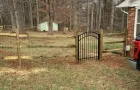
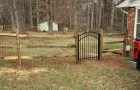
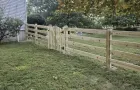
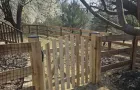
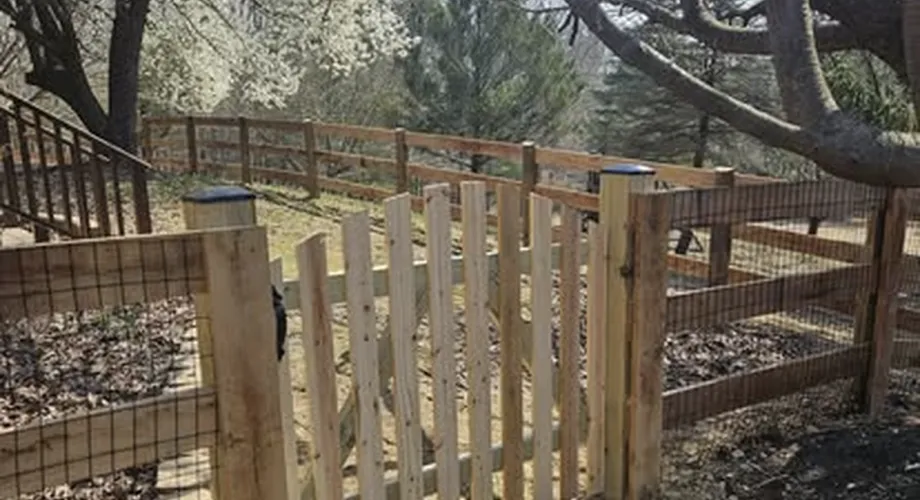
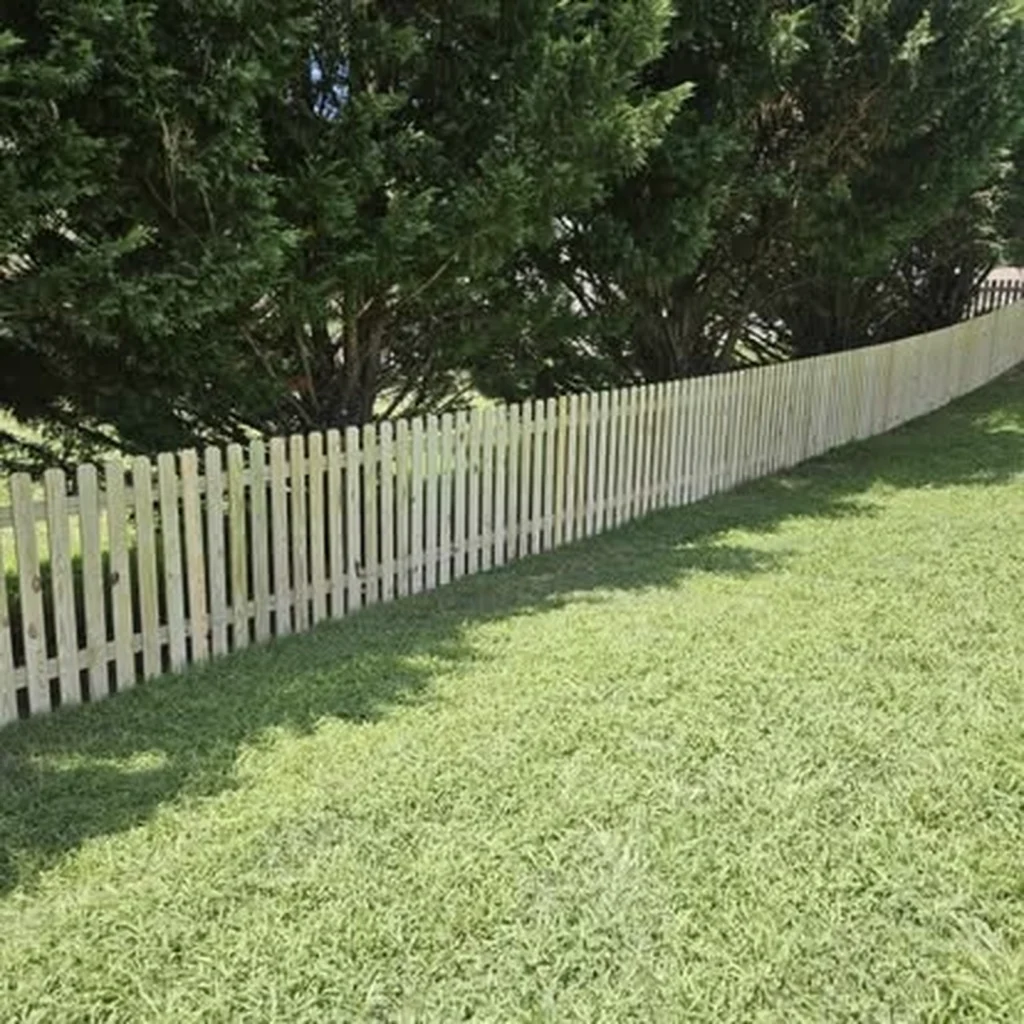
Nothing says horse country like a black or white four board fence rolling over a hill. Beyond looks, board fence earns its reputation on visibility and honesty: horses see it clearly at a gallop, and it forms a solid physical barrier that does not tangle a spooked animal. Three board versions work where budgets or slopes demand, but four board is the standard for full sized horses.
The tradeoffs are cost and upkeep. Board fence is the most expensive common farm option per foot, and it wants paint or stain on a cycle plus a walk through every season for loose or cracked boards, because a horse will find the weak one. Oak boards on pressure treated posts, set deep and faced to the animal side, is the build that lasts here.
Woven wire and no climb mesh
Woven wire is the workhorse for mixed animals: goats, sheep, cattle, donkeys, and the farm dogs all respect a properly stretched field fence. For horses, the version that matters is no climb mesh, woven in a tight two by four inch pattern that a hoof cannot pass through, which removes the leg injury risk that cheaper field fence carries.
The upgrade that makes mesh shine with horses is a top board or a strand of electric along the top. The board gives the fence visibility and keeps horses from leaning the wire down, and the whole assembly costs meaningfully less than full board fence while being arguably safer. Stretched tight on solid corner braces, a quality mesh fence gives decades of quiet service.
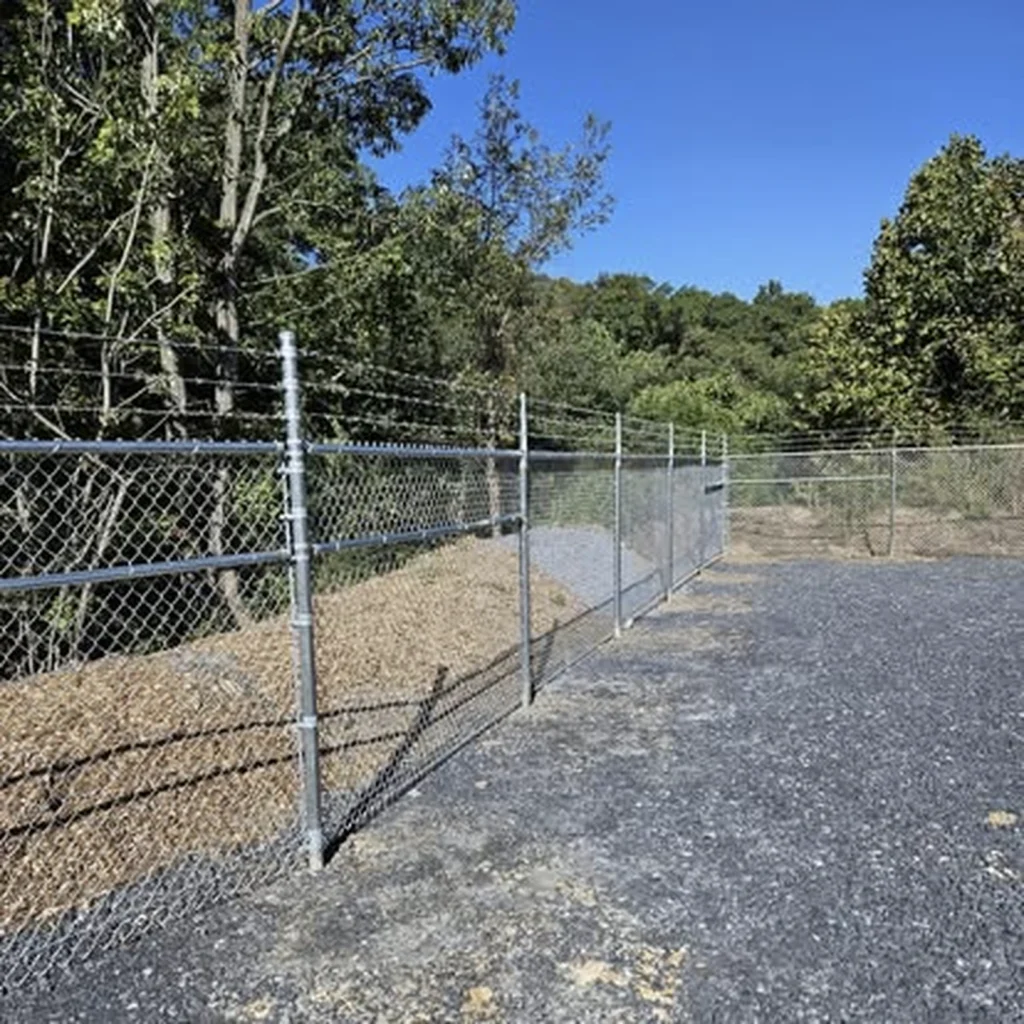
High tensile and electric: the budget stretchers
High tensile wire runs multiple smooth strands on widely spaced posts, which makes it the cheapest way to enclose serious acreage, and it takes tree limbs and deer strikes better than any fence we install. Electrifying a strand or two adds behavioral control that keeps animals from testing it. For cattle it is excellent. For horses, plain high tensile needs caution, since low visibility wire and thin skinned animals are a bad pairing.
The horse friendly versions solve that with width and color: electric braid, rope, and tape products carry the shock while being easy to see, and they make superb interior cross fencing. Chargers matter as much as wire, sized to the fence length with solar units covering pastures far from power. Plan on a voltage tester in the barn and a walk of the line after every big storm.
Gates, lanes, and the layout that saves you later
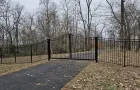
Fence is permanent in a way that grazing plans are not, so layout deserves as much thought as material. Gates need to clear the equipment you will actually run through them, which means 12 to 16 feet for tractors and trailers, placed in corners where animals naturally flow rather than mid run where they bunch. A lane connecting pastures to the barn turns one person chores into actual one person chores.
Think ahead on utilities and water too. Running a water line or planning frost free hydrants while the trencher is already on site costs little, and cross fencing laid out around a central water point makes rotational grazing simple later. We walk farm properties around Winchester with the owner before quoting, because thirty minutes with a wheel and a map saves thousands over the life of the fence.
Bottom Line
Board fence where the world sees it, no climb mesh where the horses live, and high tensile or electric braid where the acreage gets long. Match the fence to the animal and the budget follows. Winchester Fence builds board, mesh, and electric fencing for farms and horse properties across Frederick, Clarke, and the surrounding counties, and we are glad to walk your land and sketch the plan before you commit to a single post.
Related reading: Fence Height Rules and HOA Basics for Winchester Homeowners, Pool Fence Code in Virginia: What Winchester Homeowners Need to Know